Friday, April 9, 2021

What IS Essential ?


What you are about to read will change the foregone conclusions and misconceptions many people harbor on the subject of beauty and achieving your best self. I’ve personally been in the business, specializing in hands and feet, for 44 years now and have enjoyed helping people feel good and/or better about themselves through appearance. Non-essential is not a word I personally take lightly concerning my industry. As a happiness and confidence builder for me and my client, it is also a privilege to have such a profession in so many ways and I have cherished my decades of creating beauty for my clients. 

     While going through and organizing my mother’s professional hairdressing and styling magazines I came across an insert by a master hairstylist, Michael O’Rourke, who is best known as the creator of Big Sexy Hair. This was an extremely popular look during the 80s and 90s of the last century- not so long ago! As I read through it I was so impressed with his contribution to the Celebration of American Salon magazine’s 125 years informing the industry of beauty, that I’ve decided to share the following words about a singular experience he shared with us. This past year has been a definite trial to our industry because of the pandemic. When all manner of folk were unable to come to us for their most precious ‘me’ time I’m sure we all felt in need of encouragement as well. Hence: 

The Gift 

A woman came into a salon one day, long ago. She was perhaps 5’4” and weighed close to 260 pounds. She requested all of the best treatments for her hair, plus a manicure and a pedicure. As she went through her day of beauty, she smiled and laughed with everyone. There was definite, positive energy flowing through the salon and when she left, as she hugged each person in thanks, she left behind a strange sensation. It was as if she still remained. The next day, she called the salon manager and said quietly: “I came into your salon yesterday and requested all your best treatments because I was preparing to commit suicide. I wanted to feel good about myself just one time. My self-esteem had hit an all time low and I just wanted to end it. But all of you were so accepting and made me feel so special that I’m not thinking that way anymore.” 

It is my pleasure to share this true story of one woman’s journey with you, my hairdressing friends. It’s time we celebrate your gifts, your enormous talent and energy. Only you know why you became a hairdresser, why you chose this joyous path. Perhaps, it’s because you felt that you just didn’t fit in. Maybe it’s because you weren’t like your sister the brain or your brother who went to college on a football scholarship. Maybe it’s because your unique sense of creativity challenged educators who tried in vain to chart you on an I.Q. scale. For whatever reason, no matter how painful or how rough the beginning, I urge you to celebrate your choice.

 Your mathematical prowess… 

 You are a mathematical genius. Think of what you do. You may have trouble balancing your checkbook but you cut angles with the precision of a surgeon and lines and shapes with the clarity of an engineer. You do so in the middle of a three ring circus called a salon. I doubt NASA could do it as well. 

Your resourcefulness… 

Your heart and soul…  

No one feels life more than a hairdresser. Here’s to all the marriages you’ve saved, the children you’ve helped raise, the clients you’ve buried, and the divorces you’ve weathered. You have experienced life on a level that only a hairdresser can truly understand. 

Your compassion… Hairdressers are givers. We share all that we have, without hesitation; our tools, our knowledge, our opinions, our advice. We teach without knowing, understand without analyzing, and grow without intention. In fact, the more we teach others, the more we teach ourselves. 

Celebrate your instincts… But most of all, Celebrate life. 

 Live life to the fullest and know that as we go forward, each phase to come is filled with a sense of adventure. It’s a journey of self-discovery and self-celebration. We are hairdressers and your gift, my gift, our gift- is to revel in the beauty of what we do and what we bring to humanity. To be a hairdresser or beautician, nail technician or an esthetician is the greatest gift I can imagine, and perhaps the greatest gift yet to be discovered. I urge you to discover this extraordinary gift each and every day.

 Michael O’Rourke 

In closing, I would like to thank Michael O’Rourke for writing this and taking the time to share something very important to us all and that is our self-worth, our resilience and hope in a better us. It made me fully believe that no matter what we face in the future, our work and our contribution to society is as essential as eating and sleeping. Nothing inspires us more than to know that we have left this world, in some way, a little better than the way we found it. 

The Castle Lady

Tuesday, February 9, 2021

2021 Valentine Special for your Special Valentine !

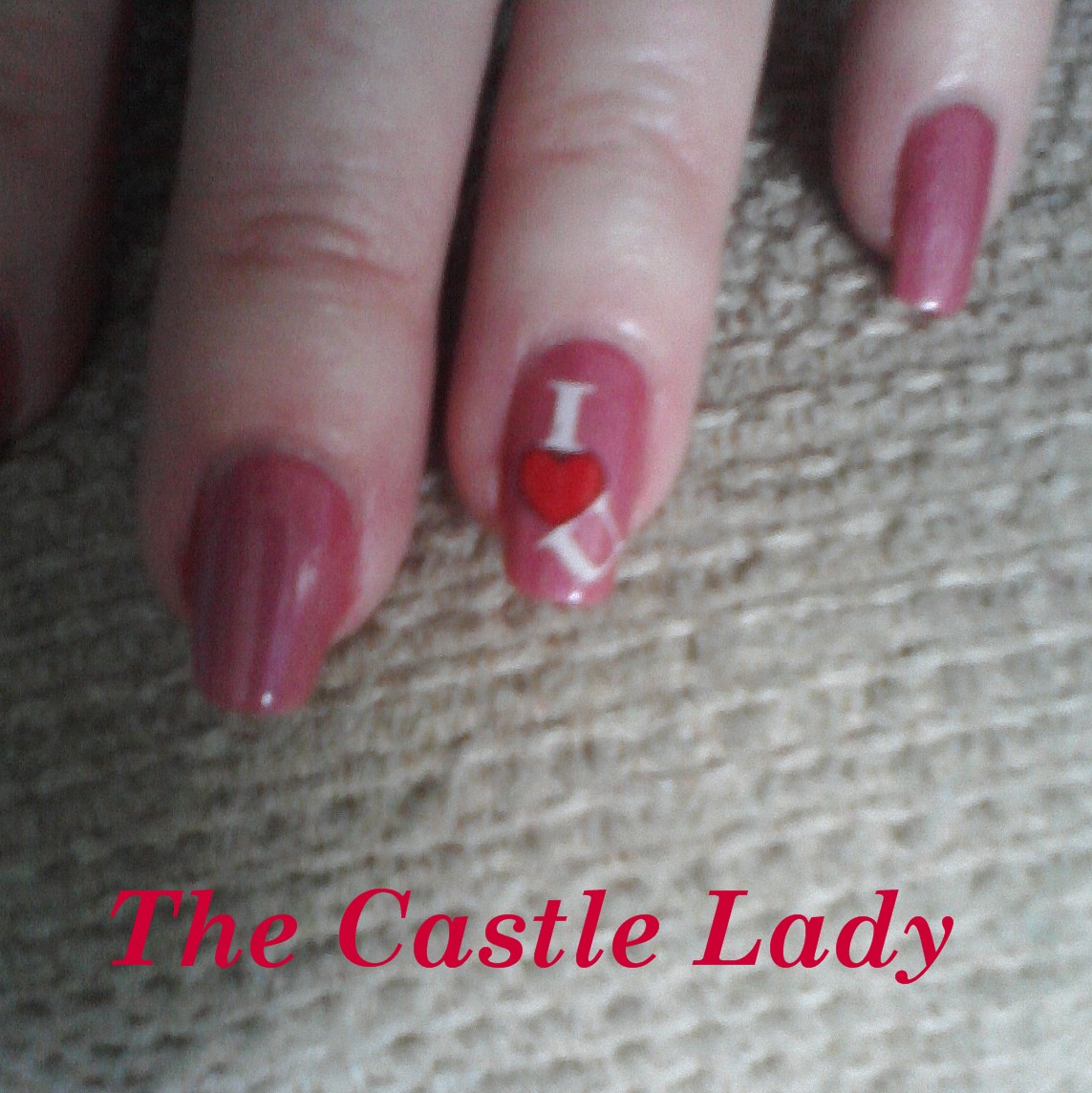
Here's a chance for you to solidify a relationship with your spouse, fiancé, or best girlfriend for life... A gift certificate with benefits like nail art or nail jewelry she's been wanting to be able to put on those special hands. 
   

I'm going to make it even easier for you! I've got a nail special going on from the 10th throughout the rest of the month! You can get your special lady a $75 full set of nails for only $37.50- she'll get some free nail art to go with it- and I'll do some additional beautiful nail art on her at untypically low prices. She'll feel like queen for a day and you'll finally be the captain of her heart!


    How does that sound? 


                  Here's my card.


I think you know what to do!
303-935-0261


Friday, March 20, 2020

The Ease of Cross-Contamination Prevention


Those of you who are seriously concerned about the spread of Coronavirus and other flu viruses should be looking into cross-contamination prevention rather than attempting to defeat contamination with constant hand-washing- which is not a feasible option if you plan on having normal days away from the facilities you would need in order to ‘keep clean’.

In truth, washing your hands constantly doesn’t sterilize them! Only hand sanitizers that have at least a 70% (or higher) ethyl alcohol content can kill most bacteria and similar microbes to 99%. You’re probably wondering at this point if there is any way, then, to prevent the spread of this virus by hand contact!

I feel that the best preventative is to follow the example of surgical physicians who not only scrupulously wash their hands prior to surgeries (and clear up to the elbow, by the way!) but also wear surgical gloves- and often two layers of gloves because it’s so easy for the gloves to be compromised by suture needles and scalpels, etc. (Even double–gloving can’t fully guard against micro-perforations, so doctors, surgical assistants and attendants may change gloves often during a single operation.) This process, however, is the essence of preventing cross-contamination.
     You’re probably wondering how this practice could feasibly be used in an every day consumers day-to-day life that is relevant and comprehensive. Since the break out of the super flu virus COVID-19, I have personally been using disposable gloves on my hands which I don prior to going into stores- before I ever have to manually pull a publicly-used door open! I keep the gloves on while I shop, check out and after I leave the store I pull them off and properly discard them in a wastebasket. You can buy very inexpensive plastic liner gloves in a dollar store for about $1 per hundred. This process makes hand washing irrelevant and unnecessary. It protects you, other shoppers, the checkout clerk and even the stock workers. What could be easier than that, I ask?
     May 28, 2020 update: 
          
In case you’re unfamiliar, here’s a quick recap of how to safely remove your gloves:
  • Grasp the outside of one glove at the wrist, being careful not touch your skin.
  • Peel the glove away from your body, pulling it inside out.
  • Hold the glove you just removed in your other gloved hand.
  • Peel off the second glove by putting your fingers inside the glove at the top of your wrist.
  • Turn the second glove inside out while pulling it away from your body, leaving the first glove inside the second.
  • Throw the gloves into the trash immediately. (Don’t leave them in the store parking lot outside of your vehicle or try to reuse them later.)
  • Wash your hands or use hand sanitizer directly after you’ve removed the gloves, if you wish.

      How do I know about this, you say? Well, as a licensed professional manicurist I was trained in sterilization and sanitization while I attended school for my diploma. While in school I did 60 hours instruction and practice in sterilization and sanitization- 20 more hours than is required by law- and I received high grades in every aspect of my training. I received a 100% on sterilization.

     There are some codes and regulations that licensed beauty professionals must adhere to, concerning public safety and health, not just for themselves but the public that they work on every day. The two most important regulations concerning the prevention of spreading viruses are under:

     Section 7312 (e), Busi. and Prof. Code  983 (b) Every licensee or student performing services shall thoroughly wash his or her hands with soap and water and/or any equally effective alcohol-based hand-cleaning product immediately before serving each client.

     Section 7312, (e) Busi. and Prof. Code  984 (a) No establishment or school shall knowingly permit a licensee or student afflicted with an infection or parasitic infestation capable of being transmitted to a client, to serve clients or train in the establishment or school.
     The latter is also under the Health and Safety Code under section 121365 for the California State Board. Colorado and most other states have identical or similarly written and published codes with numerous others under Article 12.


     There are more numerous and extensive laws that prevent us from doing any services on potential patrons who have infectious diseases and illnesses, as well. This is obviously also a cross-contamination prevention measure which should be strictly enforced but many nail salons are being run by unlicensed techs whose salons are often also unlicensed. I’m sure you can see the potential dangers that lurk in ignorance of these laws.

     Application of these laws for both patron and nail techs is imperative in times when virus breakouts like COVID-19 are in a state of epidemic for a nation the size of ours. Obviously, the uses of gloves are not practical or feasible for the patron in these cases, so the nail tech needs to be as vigilant and aware as the patron in discerning problems either way. Get yourself educated. Talk about these concerns with the potential tech before you ever walk through those doors and make certain that you will be protected. If you are sick, quarantine yourself. Think of others. Be responsible. The life you save may be your own.  

Need conversation on this subject? Leave a comment. I'd love to help!
 

Friday, February 28, 2020

Keeping your hands healthy and beautiful


    One subject that I have not yet covered but may be quite timely to discuss, is how we may consistently wear artificial nails or strengthening shields (on natural nails) but keep such problems as mildew and fungus- which may occur at any time- cured or under control. In cases of more than 5 outbreaks, on separate nails, in the same occurrence I usually urge the client to have all artificial products removed and go through a series of nail treatments to cure the outbreaks and also to probe for any provoking activity which may have caused the outbreaks. Excessive lifting of artificial product combined with a lot of hands-in-water usage exacerbates the outbreaks of mildew specifically and that is why removal of all artificial products is crucial to quick recovery in extreme cases.
     First, it is necessary for you and your technician to recognize the difference between mildew breakouts and nail fungus. Mildew breakouts are easily treatable whereas fungus is much more difficult to get under control. (You should also know that fungus is discovered in the nail bed and under the nail and is not caused by wearing artificial nail products.)
    Wearing artificial nail products in continuance with either occurrence will make it more difficult if not impossible to treat with any success. Fungus does not just show up in one nail but may infect every single fingernail because the cause is underlying, in underlying tissue (nail bed), and not the nail itself. Mildew, conversely, starts and spreads on top of the nail and can be treated with professionally formulated products, or thymol and/or white iodine quite effectively and easily. It may infect one nail only, several or all the nails. An old cure method of mildew made use of chlorine to treat mildew but has long been abandoned for use because it is too extreme and can permanently disfigure nails. The practice of using chlorine which has a distinctive and strong odor has also been banned for such use as it was never intended to be used on or near human tissue of any kind.
     (Caution note: Primer does not kill or treat fungus. Its unusually strong odor doesn’t create any such effect on the nail. The sole purpose of primer is to soften nail tissue to make acrylic bond tighter to the nail. If your nail tech thinks primer has any such antiseptic properties, find yourself a licensed nail tech who knows how to treat the problem!)
     Mildew infections are a distinctive green color. Treatments will not remove the color stain at all- only the infection. The nail infected with mildew must be left to open air after one treatment and will fade as long as the nails are kept clean and dry. No band aids, tape or any covering that can trap moisture should be on the nails for at least 72 hours after treatment. After that, artificial nails may be applied over the affected area as long as both client and tech are assured that the artificial product will not lift after application. This is because trapped water between overlay and fingernail may start the infection process all over again.
    
healthy set
A fungus infected nail, however, will have a distinctive and bright yellow look to it. It cannot be filed off or treated topically but should be treated as a highly contagious problem very much like athlete’s foot. Nail technicians should know to refer you to a doctor- although treatments by regular doctors are very controversial and may cause worse problems to the client than the limited effects of nail fungus. Sometimes fungus is transferred from toe nails to fingernails. In any case hands would have to be exposed, in some way, with fungus in order to start a fungal infection. If it goes untreated it will not go away with air exposure because it is trapped between the nail plate and the nail bed. You may have more success in ridding yourself of it if you contact a podiatrist because they deal with this type of fungus much more often and most likely, with more success. For obvious reasons, you should not wear artificial nails at this time and certainly not until the condition has been cured. A podiatrist will insist on removal of artificial product in order to treat a patient. It is for this reason that I only recommend visiting a podiatrist rather than a regular MD.
     I have personally taken some statistics down based on my own experience with all my clients over a forty-two year period and have discovered that I have only had to treat 2% of my clients with mildew breakouts. Most of them were limited- one outbreak or a few and never all ten nails. I have seen fungus under the toenails of quite a few people who were not clients. However, I have not yet encountered anyone with fungus under toenails or fingernails as a client. It is very unlikely, according to my decades of experience, that you will ever contract such a fungus. As I said before, artificial nail products are irrelevant and immaterial to fungal infections. However, I cannot stress enough to you that if you are one of the few people who are prone to nail fungal infections, I would advise you to not wear any types of artificial nails because wearing them would only complicate a cure and perhaps exacerbate the condition and prevent a cure, ultimately.
    Mildew is much more common. You should check your nails- with each lifted nail enhancement- to find out if mildew accompanied the problem. It should be treated by your tech as soon as possible and if this is not possible then you should keep white iodine on hand to treat it yourself until you can get to your tech. If other clients of your tech experience a lot of mildew problems your tech may be spreading the condition because she’s not practicing good sanitation habits. It pays to converse with fellow clients! It is possible that metal bit drills, if not routinely sanitized, can spread mildew like wildfire. You can also just develop it on your own with no fault from the tech but when you are being treated check to make sure that the bit used on you is sanitized before and after your service, regardless. The most important part of professional manicure sanitation is prevention measures. I prefer to use disposable, coarse file wraps on bits, which can be used once and thrown away.


Wednesday, September 5, 2018

Getting Technical

about your fingernails...


    I’m not in the habit of revealing information about my work by disclosing my trade secrets or information I feel should be reserved for the student of nail technology. Each technician- whether professionally licensed or not- would rather keep their technique and what sets them apart from other techs under wraps. We do this because amateurs or DIYers may not be as conscientious about how they work and they don’t really know how to apply such information or techniques in a way that would do it justice. So as a rule, I keep those things under wraps. If you want to test me then you’ll have to make an appointment for yourself to find out. The proof’s in the pudding!

     However, misinformation online and in consumer-oriented magazines can be so bad I simply must set the record straight for everybody. Being educated in an industry which you patronize is your best line of defense against fraud and malpractice. I find myself quite privileged to know as much as I do about the industry and often feel the need to pass the right information along any time I can see that wrong information or practices could do serious harm to an uninformed consumer.

     The diagram underneath came straight off the internet with an eye to give inside information to consumers. It is so erroneous that I am going to point out every single error in hopes that it will clear up confusion for patrons and may also inform new techs who are still in the process of learning- even with a license and diploma in hand. Those techs should not feel they are being shamed. As with any profession, learning is an ongoing process which never ends, fueled by experience and sometimes by trial-and-error.


Four of the nine tags on this diagram detail of the tip of the finger are wrong. First, a quick rundown on the errors:

     The label for hangnails located on the left of the photo in white letters should be labeled skin tags. This is simply torn skin above the nail cuticle line and usually occurs from handling paper. Paper sometimes makes very small cuts into dry skin which may eventually start to tear further back. Using cuticle oil liberally and often may stop further tearing, depending on how much you have to deal with paper. Wearing rubber fingers on your nail tips may prevent tags if you must work with paper. These can be cut expertly by well-experienced manicurists.

     The Sidewall Hangnail is just simply an actual hangnail also technically referred to as an agnail. Hangnails are serious tear-aways of tissue which cushions the nail groove along either side of the nail. Sometimes you may experience bleeding along with them. If you pull at them they definitely will bleed because it causes this important fold of skin to pull out live tissue from underneath the nail plate creating a split in the nail and usually resulting in an infection. Bleeding hangnails require first-aid before any work can be done on them and should not be manicured until the area is scabbed and free of infection.

     The hangnail depicted is not infected and can be cut and smoothed without invading the epithelial tissue underneath by a licensed manicurist. If bleeding should occur after the incision, it must be treated with antiseptic, stanched and covered with a small cotton pledget and then bandaged.
     The Lunula is simply a white, moon shaped appearance at the base of the nail where it grows out. It appears on fast-growing nails and is usually most often seen on children and young people’s hands. This is an area where the nail is still in the process of hardening as it grows out and appears white due to the reflection of light where the matrix and the connective tissue of the nail-bed join. It is not on top of the nail but is a part of it. Manicurists should not put excessive pressure on the nail at that area as it is too soft for such pressure and will damage it. For this very reason I am extremely careful about what I do on young fingernails!

     The dry and cracked-looking area tagged Proximal Nail Fold of the Eponychium is, in fact, the actual cuticle line and the entire area that surrounds the nail border is technically referred to as Perionychium. The spot depicted as Cuticle is a condition called pterygium and the photo above is actually showing the effects of a botched manicure on the problem, hence the dry and cracked area which has actually been mutilated. The excessive forward growth shown is typical of the condition and fiercely adheres to the nail plate. Pterygium may either break away from the nail fold or it may stay attached in rare and tough cases. In the past, cuticle nippers were used to cut away the growth from the cuticle line. Because this is rarely successful and may be hazardous, a better solution is to always do hot oil manicures on people with this condition and use pushers with no abrasiveness or hardness. Rubber tipped pushers for pterygium are ideal. People with pterygium should use cuticle oil as often as they brush their teeth and make a conscientious effort to gently push back their cuticles with a towel after hand-washing or bathing. In any case, keeping that cuticle as soft and pliable as possible is the goal. Pterygium is a rare condition.

     Lastly, the two labels Distal Edge of Nail Plate and Free Edge are exactly the same thing and are obvious.


     I hope this information was helpful to you. If you have any comments or questions on the material covered on this entry please leave it in the comments. Your information will be kept confidential. 


Friday, July 27, 2018

Essential Elements of a Professional Pedicure


Even if you’ve had pedicures- either at a spa or beauty or nail salons- the rudiments of the procedure may be a total mystery to you. Are you surprised? Because of the very nature of the service, anyone with a foot and a few minutes of having it rubbed will more than likely feel absolutely pleased at that specific experience alone. I can’t fault anyone for feeling this way and don’t by any means! An important part of the service is about feeling good and creating a healthful and relaxing experience. If someone pays huge sums of money just to have their feet rubbed, however, my concern as a licensed professional is the ignorance of the entirety of the pedicure service. A professional pedicure is a very specific and involved set of processes aimed at common key issues which are inclusive to any form of the service- very much like a manicure with the emphasis on health and dealing with issues most of the time. Very few people can walk on their hands but everyone walks on their feet so getting a proper pedicure may be essential to the most important part of your anatomy!
     When people come to me for pedicures the first thing I ask them is if they have any concerns about their feet that I should look at and either work on the problem during the service or recommend medical services to follow up. This is even more important for the feet than the hands because many pedicure clients often can’t actually see the problems but they can feel them. For example, they may have soreness in areas which they cannot reach or view well enough to see what the matter might be. When someone fresh out of school (or completely unschooled) works on your feet they most likely will not notice problems that I can often spot on sight. I ask questions to find out if my suspicions are right or to ascertain whether I can proceed with the service safely. In most cases, I can proceed. My obligation to the client is a chance to give each person a professional assessment of what may or may not be going on with their feet. Having your feet examined by a professional with a lot of experience concerning foot problems or conditions is a plus in any case. I have learned quite a bit about foot ailments by working on people with problems, concerns and conditions and also by consulting podiatrists about diseases and conditions which are not within the scope of my work to handle. In addition, at every opportunity I educate myself about various foot diseases or injuries and how they are studied, examined and treated. I’d certainly rather be overeducated than not be able to help people determine what their foot problems may be, in any case, even if I decide not to perform the service and refer them to a podiatrist instead.  
     The following text and diagrams on this entry are the basics of a standard pedicure service according to the national textbook on cosmetology. If more services than these following procedures are given during your pedicure and they do not cause discomfort or problems for you, then you can assume that the individual performing these services are additional rather than standard in the common practice of pedicures according to most state boards of cosmetology. Licensed, professional pedicurists will never skip the following steps. (In other words, more steps are additional; less steps mean you didn’t even receive a standard service.) Word to the wise!
    
Once your feet are examined and cleared for a basic service the (1) first step will be soaking the feet in quite warm (but not uncomfortably hot!) soapy water. The soaking solution may be specifically formulated for pedicure procedures and a common additive is tea tree oil which has antiseptic properties and is non-drying to the skin and other tissues. Other solutions should all have antiseptic properties even under normal conditions. Feet should soak for at least 15 to 20 minutes before actual work on any part of the feet occurs. No nail clipping should be done prior to the soak unless your toenails are thin and weak or fragile. If the latter is true then clipping and file finishing first may be necessary. (Cutting weak nails after soaking them in water may cause irreparable damage to the nails!) Removal of old polish on toenails prior to the soak is preferable but can also be done after soaking. Personally, I always remove old polish prior to soaking.
     Each foot is treated separately during the service. While one foot is being treated the other should go back to or remain in the water, whether it is the original soaking solution or a clear bath refresh to remove materials used during the service. 


The nails should be (2) cut straight across with standard straight clippers. The corners of
toenails should never be cut at an angle or rounded as this may encourage ingrown toenails depending on how convex, tubular or arched the toenails are- especially along the side edges- the large toe being the most commonly prone to ingrown problems than any other. Filing and beveling for smoothness to the edges is also standard procedure. 


     After removal from the water (3) cuticle remover must be applied along the cuticle line before any work on the cuticle. A fine pumice stone cuticle pusher is best to use on toenails as it is gentle for use on the forward growth from the tougher cuticle (eponychium) attached to the base of the nail plate. Otherwise, a metal pusher may be used but is not recommended by myself. A good pedicurist will work around the hyponychium (foundation mantle which nail is attached to and the sides are embedded in along the side nail grooves) to remove debris- not the hyponychium itself. This should be done gently and without uncomfortable pain, of course. 


pumice stone cuticle pushers
Eponychium can be (4) pushed back and any excess removed from the nail plate should be (5) trimmed with a cuticle nipper. Any ragged or torn pieces of cuticle can also be cut with the cuticle nipper. (Note: This procedure is the same for manicures.) The best tool for working around the hyponychium is an orangewood stick alone or wrapped with cotton. 


The pointed corners of the toenail, created by the straight cut, can be beveled with the pumice stone cuticle pusher safely and comfortably. Invasive work on the hyponychium is not only forbidden, it would also be very uncomfortable and compromising. Be sure to alert the technician if you experience any discomfort or overt pain. Hangnails may occur along the pointed corners and if they loosen and become apparent with beveling they can be cut where they overextend the nail edge quite comfortably. Only allow this if your technician is skilled in the practice of removal with quite a few years of experience. Expert removal of hangnails may help prevent ingrown toenails. Take note that the onset of hangnails is quite common and may be particularly bothersome to someone who does not receive frequent or regular pedicures.
   
  (6) Removal of surface calluses and rough spots are gently removed with foot file exfoliaters. These are oval shaped with a large handle and are quite large in order to handle removal of difficult (hardened) or deep calluses. Used in a back and forth direction, they are quite effective for their purpose. They are NOT for removing blisters, bunions or corns. Those are handled strictly by podiatrists and chiropodists. Extensive work on calluses can also be done with lotion exfoliaters which impart additional smoothness and cause excised skin remainders to just roll off in a gentle peel. That must also be rinsed off the foot prior to the next step.


(7) Massage with lotion specially formulated for feet is most often used for this very important and serious part of the service. No other part of the technician’s hands, other than the tips of fingers, should make light pressure contact with the foot. Manipulations used vary widely and can be quite involved. Those which work well on the foot are small, rotary movements with sweeping motions upward from the ankle up to the knee. Only very light movements with no pressure may be used over the shin. Licensed manicurists can do massages just past the knee so our allowed massage range is sizable enough to create real relaxation. 
    

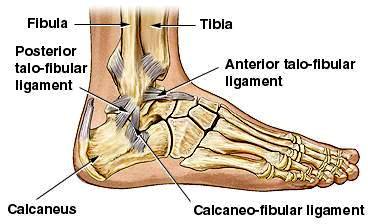
Fisting or knuckling the bottom of the foot is not only generally quite uncomfortable, it is expressly dangerous and should not be done. Of the 206 bones which comprise human anatomy, 106 or more are contained in our feet and hands which are very small and fragile- even in the largest of feet and hands. Metacarpal bones in the wrists and ankles are particularly small and vulnerable, so should be left alone. The tendons and ligaments in the feet are intricately structured for specific movement and should not be disturbed or manipulated out of their regions. Your knee can be straightened during a massage but bending it backward to bow will cause serious problems eventually. Can you show me anyone who would want to walk away from a pedicure practically crippled?


     Last but not least, (8) polishing is done and making sure the toenails are free of any residual pedicure product is important. The technician may soak and wipe off the entirety of the feet or simply use a damp towel to make sure the nails are completely clean. Toe separators are used to prevent mishaps while waiting for the finish to dry or cure. Base, color and topcoat are used the same as a manicure.  
     It is currently very popular in spas to use pedicure masks made with avocados, mangoes, etc. and often amps up the price of pedicures considerably. My advice is to stick with basic products specifically formulated for pedicures, without giving in to wild claims of these dubious concoctions. They may be pleasant or extraneously silly but are often just an excuse to charge more for the service. If you really want to try these things, try them on yourself first and then consider whether you really want to pay considerably more for these often outlandish products- packaged or not.
     Fish pedicures sounded like a big joke until I started reading about them in my professional magazines as something to warn our patrons about- absolutely true! I didn’t believe any of it until it was confirmed that many Viet salons were using this method for so-called exfoliation of dead skin. Do I need to tell you not to do it? In many cases it may be a good idea to ask to examine the pedicure area of a salon prior to making an appointment for a service anywhere! If something looks (or smells) fishy it probably is so be sure to report them to your local state board of Cosmetology and/or Barbering. It isn’t legal but it’s definitely crazy! As for me, I’ll pass on the piranha pedicure, thanks !
    
California is leading the country at present for having implemented express and detailed regulations on sanitization of all-in-one pedicure spas. (Those are the chair, seat massage and incorporated bath type units which are quite prevalent today in most nail salons or full service salons.) A spa pedicure can be had without the use of these all-in-ones but are generally regarded as standard pedicures. The true classification of a spa pedicure is in the professionalism in the products and service itself so if your feet are placed in a bucket of soapy water alone you technically didn’t get a spa pedicure. The bath you actually soak in is what makes the difference which will move and heat the water. Professional technicians often personally own a free-standing pedicure whirlpool bath so that they can do pedicures anywhere whether or not they have a mobile license. Sanitization of these independent whirlpool baths is simple by comparison to the fixed station all-in-ones. (All-in-ones must be sanitized topically and internally since it has its own plumbing.)
     I have been doing the California standard for sanitization of pedicure spas since its inception in the 90s because I am California and Colorado State licensed. These rules are quite stringent because they were implemented after serious infectious outbreaks of skin ailments and diseases (which were permanently scarring in most cases) on women in California who received pedicure services with the newly invented all-in-one spas. These brand new inventions were not being properly sanitized despite clear manufacturer’s instructions and the laws passed after that time enforced the instructions as regulations. If your state board has not implemented this standard for the regulations, which are now decades old, you may want to urge them to do so! 
     If you want to know for certain that the salon you have selected conforms to these rules check to see if there is a detailed list displayed in the pedicure area notated with specifics of before and after pedicure services with dates, times and products used for sanitizing. If there is no list posted, ask to see one and if that cannot be produced, proceed only with caution. You can call your state board of Cosmetology to find out if specific salons have received citations for not complying with sanitization. Determining the rules for your state will reveal whether they are rather lax or up to the California standard. There hasn’t been implementation of reciprocity of the California standard in all states so you may have to do quite a bit of checking before you can be certain of these standards for any salon. In any case, the list on the wall is very important because these are checked by regulatory department scouts and employed inspectors from state boards across the country. Nearly all the states have state boards.
     In closing I also want to mention the disposable liner type pedicure stations. Even if you personally buy the liner from a wrapped package you’ll still have to sanitize the liner prior to usage. Save your money and find a salon that is up to or above the state code for an all-in-one. The complete experience will be worth the time you spend to make sure everything is state board approved and followed !

Enjoy ! 

The Castle Lady

Tuesday, March 20, 2018

Internet DIY vs The Professional Manicure


     I’m starting to become alarmed at the ridiculous and downright conning that is going on in so-called amateur video tutorials, professional-looking web sites that claim to teach people how to do their own nails for $49 (without creds to teach, of course !), DIY nail product selling with dubious tools and products and all types of chicanery in the amateur manicure and nails industry. I cannot emphasize enough that any article, web site, video, T.V. or internet merchandizing that tells you that you can do your own nails with the same knowledge and skill and as good as (or better than) a licensed professional is just a scam to take your money and run.
     The internet videos go on and on with their free advice and clumsy demonstrations (on their own hands, invariably) and impart more misinformation than I have ever read in magazine articles! The other night I watched a video by someone who calls herself a nails enthusiast. She’d taken her acrylics off which she claims has been professionally done for a decade. Taking it upon herself to remove them caused obvious damage to her nails in addition to the damage that the so-called professional did by using a drill on her- and showed how she ‘got her nails back to health’ by rubbing garlic on the ends of her fingers, later digging her fingers into lemons cut in half, etc. Her claims for each one of these was about as far-fetched as any old wives’ tale remedies and it goes on so long that I realized she took months making this long, drawn-out video to the point that I started to think that watching paint dry might be more interesting ! ! OY-VAY ! Not a bit of this video was in any way professional advice nor did it show me anything to prove her point. As a matter of fact it was sheer torture listening to and watching this enthusiast  bungle around with her nails for no less than a half hour. Let me set the record straight right now. Garlic will not make your nails grow faster. Lemons will not whiten your nails but they will make them extremely brittle over a period of time. Professionals use nail white paste or pencils. French manicures are done with a temporary enamel or gel finish.
     I have been doing nails now for forty-one years and when someone sits down at my table I educate them about why I do certain manipulations, use products and tools a certain way and how to go about home maintenance should it ever be necessary. The latter I mentioned is a very rare incidence since I urge my clients to come for regular care if they want to keep up the look I have achieved for them. I don’t know why anyone would think that because they had their nails done by someone for years that they can ‘figure it all out for themselves’ from now on; Perhaps even thinking that they can teach someone else how to manicure or put on acrylic with info that is over their heads is nonsense. Once someone goes to a professional tech- licensed or not- they would know, beyond a shadow of a doubt, that they could not match the expertise of the work just by messing around with their home remedies or products which can be bought in a Consumer Beauty Supply Store. (Most professionals will not use any product which shows up in a Consumer Beauty Supply for a good reason. Professional Supply Houses drop any product which shows up, under license, in a Consumer Beauty Supply, also, by the way.) I do not recommend that anyone ever go to a non-licensed professional nail tech. The sanitation/ cross-contamination risk is one factor but the damage from incorrect overuse of drills is another reason I would advise potential patrons to avoid them. Another reason is that many of these non-licensed professionals can’t do a simple manicure on hands. They haven’t the expertise or the proper equipment.


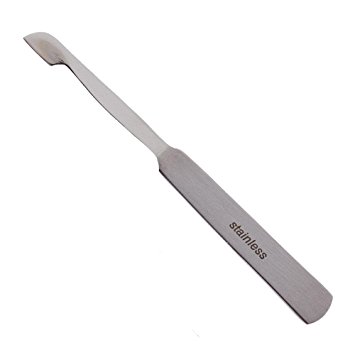
( cuticle knives sold on internet )
  

     Manicure implements are being sold on the internet which have been banned by the State Boards or have gone out of use by professionals because they have been phased out or proven unsafe or ineffective. One such implement is the cuticle knife (pictured above) which is referred to in consumer-directed ads, sometimes, as dual-ended cuticle trimmers. These implements are not used or recommended by professionals or cosmetology schools. I believed they were banned until I saw them all over the internet to be purchased by consumers recently. I have seen the damage, personally, caused by these horrific-looking implements and it takes a long time to get cuticles to behave and look normal after someone has used them. There is no correct way to use these implements to avoid the damage they do. The actual blade cannot be controlled- it is a non-movable part- and is nearly impossible to use without overcutting. Incidentally, I believe these may be a copy of a surgical tool once used by podiatrists to remove hangnails and agnails (toes) before they cause ingrown toenails. I saw two videos on the internet of amateurs showing how they use these unsafe implements to trim cuticles and loose skin and the videos looked edited.

     Any cutting of loose skin around the cuticle line or the actual cuticle is removed by a professional with a cuticle nipper. If you look close we all have different-looking nippers which would give a consumer the wrong impression. There are two features however which are invariable and make our training a bit easier. These are the two blades that meet and curved handles which fit the hand for complete control. I have watched consumers use these implements which can be bought in any drugstore. A professional could use these, technically, and would probably do a superior job. Consumers use nippers like they are plucking their eyebrows ! A huge no-no. This only causes a worse problem than they started out with and the damage is painful to watch. If you care about your health at all don’t use these implements unless you can get a nail tech or professional to show you how to use it correctly.

     Curved end toenail clippers have made a comeback in mail order and I can tell you what’s wrong with them if you’ll hear me out. Toenails should only be cut straight across in order to prevent ingrown toenails. If you cut the side of the nail with a curved blade you will most certainly get ingrown toenails. It happened to me when I was very young and it took a podiatrist doing the almost unthinkable in order to straighten the problem out. Only soaking the nails in sanitized, soapy warm water to soften the nails will prevent reoccurrences. Therefore you would never want to use a curved blade on your toenails- only a straight, flat blade. The ads are made to appear as if it’s easier to use these implements but the damage you’ll inevitably do with them will be difficult and time-consuming to correct by a doctor or professional.
     Two ads for fungus cures showed up in coupon inserts, recently, in my newspaper so no matter where you live in the states you’ll see these ads. It looks like the manufacturers finally did their homework but the consumer should read everything well. Fungicure claims to kill 6 types of fungus but doesn’t say what these types are or how to detect them. I suppose some information is on the inside of the package but if you want to save yourself some money my advice is to get in contact with the company at www.fungicure.com and ask them every question you can think of and find out how the product works. Lamisil cream was directly opposite that ad and I know personally that it’s highly effective on athlete’s foot only. The way the ad looks, one may be having diabetic pains and think they have fungus! In very fine print the ad tells you that their triple action formula is for treating athlete’s foot where it’s the most difficult to get rid of- between the toes! A longstanding client of mine had a case that wouldn’t go away and she periodically showed me the progress of its use over a period of time and we were both pleased with the outcome. Both of these products must be used exactly as directed and no other way.

     Some people believe that they should only go to a podiatrist with all their foot needs but I know for a fact that many podiatrists send people to professional pedicurists to get normal foot care. They don’t bother with such- beyond showing people how they should cut their toenails. The first reason is that they don’t have time to sit and do an actual pedicure on patients. Even they concede that the patient is better off going to a professionally licensed pedicurist than relying on them for such a time-consuming task. Many of their patients have serious problems and they prefer to work at what they were educated to do. 
    
One more thing... would you let anyone hook this thing up to your big toe? Didn't think so. OY OY OY ! It looks like some sort of torture device. NOT !